Cotton Poplin vs Plain Weave — Which Base for Printed Dresses?
Poplin and plain-weave cotton look identical in photos but feel different in hand. A wholesale mill explains which to spec for dresses, kids', or shirts.
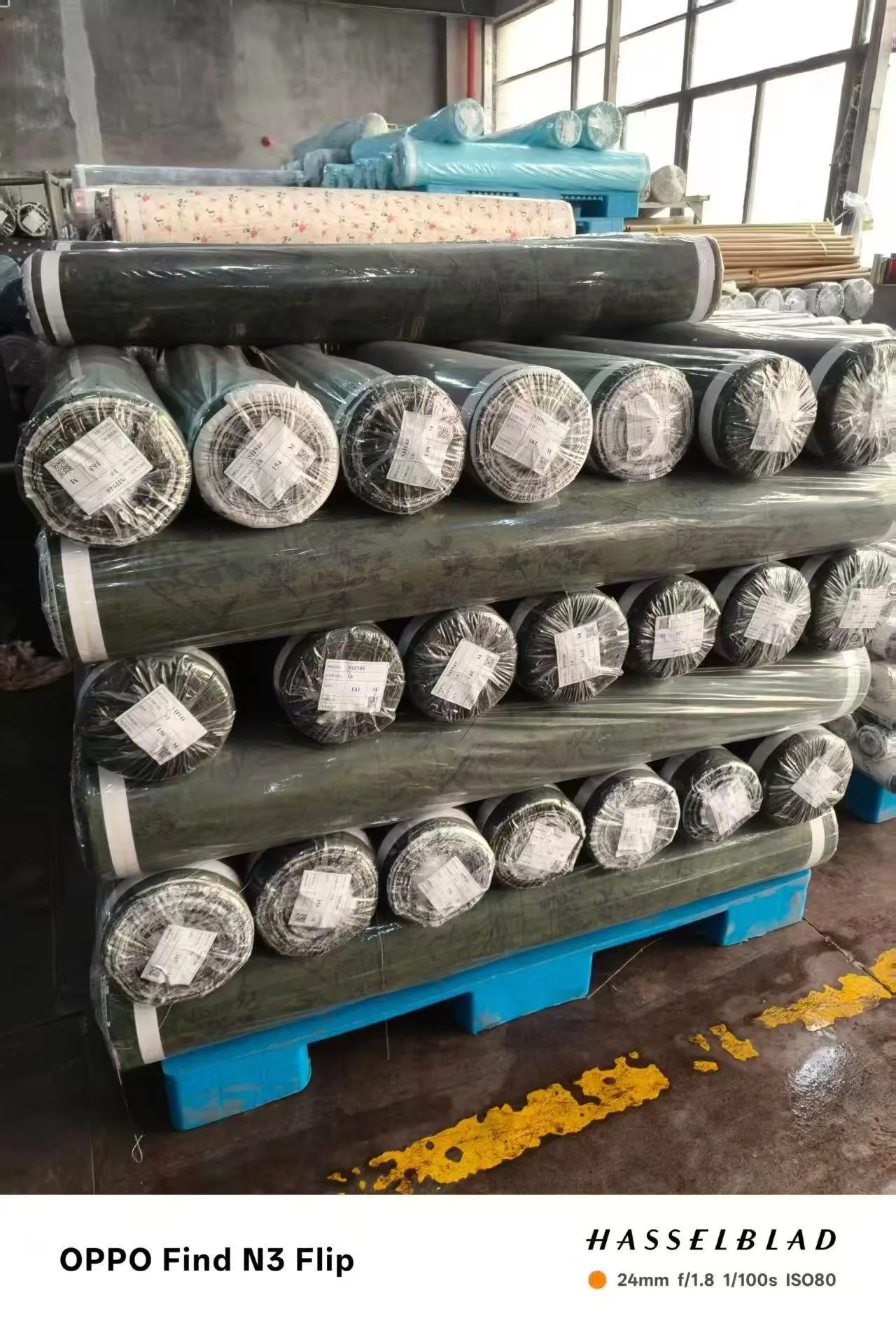
A buyer in Brisbane sent us two cotton swatch samples she had received from competing Chinese mills. Both labeled “100% cotton, 130 GSM, 145 cm width.” Both with the same artwork. The first quoted at $1.65/m, the second at $1.95/m — an 18% gap that her sourcing agent could not explain. “Same fiber, same weight, same width. Why is one 30 cents more?”
The answer is construction: the cheaper bolt was a standard balanced plain weave; the pricier one was cotton poplin — technically also a plain weave, but with warp threads 2-3× denser than the weft, giving it the characteristic fine horizontal ribbing, tighter hand, and better print clarity. Same fiber, same GSM, completely different cloth.
This is the most common cotton-spec confusion we see in first-time wholesale orders. This article is the chart we walk every new buyer through.
What “plain weave” actually means
Plain weave is the most basic weaving pattern: one warp thread over, one weft thread under, alternating. It produces a balanced fabric where the warp and weft are roughly equal density. Most cheap cotton sheeting, muslin, and basic cotton dress goods are plain weave.
Poplin is a type of plain weave with a specific construction trick: the warp threads are much finer and packed much more densely than the weft. The weft threads sit slightly thicker, creating a fine horizontal rib (you can feel it under your fingernail) and a tighter, smoother face. This warp-dense construction is what gives poplin its characteristic “crisp hand.”
So technically: all poplin is plain weave, but not all plain weave is poplin. The wholesale market uses the terms loosely, which is why buyers get confused on spec sheets.
Side-by-side comparison on the dimensions that matter
| Dimension | Standard Plain Weave | Cotton Poplin |
|---|---|---|
| Warp:weft density ratio | ~1:1 (balanced) | ~2:1 to 3:1 (warp-dense) |
| Typical GSM range | 100-130 | 110-160 |
| Hand feel | Soft, slightly loose | Crisp, smooth, slight body |
| Surface for printing | Slightly fuzzy | Smooth, sharp print edges |
| Print clarity (rotary/digital) | Good for bold, simple designs | Excellent for fine detail, photo-realistic prints |
| Wrinkle behavior | Wrinkles easily, softens with wear | Holds shape longer, resists wrinkling |
| Wholesale cost (130 GSM) | $1.40-1.80/m at 150 m MOQ | $1.70-2.20/m at 150 m MOQ |
| Shrinkage (first wash) | 4-6% | 3-5% (warp-dense = more stable) |
| Best end-use | T-shirts, kids’ play wear, casual dresses, linings | Shirts, blouses, structured dresses, printed kids’ wear |
| Wash & wear life | Softens fast, stretches in shape | Holds shape, stiffness softens slightly over time |
The 18-30 cents per meter cost gap traces back to yarn count and weaving setup: poplin requires finer warp yarn (40-60 count vs. 20-30 for standard plain weave) and slower loom speed to handle the warp-dense beat-up. That cost shows up in every meter sold.
When standard plain weave is the right answer
Plain weave (the loose, balanced kind) is the right call when any of these are true:
- Soft, lived-in hand is part of the aesthetic — bohemian dresses, sleep wear, summer kaftans where the fabric should drape and soften.
- Retail price is tight — kid’s seasonal items, fast-fashion impulse pieces, plus-size loungewear where every $0.20/m counts.
- The print is bold and simple — large floral, geometric block prints, ethnic patterns. Fine print clarity isn’t a deciding factor.
- The garment will be heavily washed — softness improves with each wash, so “wears in well” is a feature.
Most of our cotton-christmas-print and cotton-kids-print bases run on standard plain weave specifically because the seasonal/kids’ channel is price-sensitive and the bold prints don’t need poplin’s clarity premium.
When cotton poplin is the right answer
Poplin earns its price premium when at least one of the following is true:
- Fine print detail matters — photo-realistic flowers, fine paisley, small-scale ditsy prints. Poplin’s smooth surface holds detail that plain weave can blur. Our cotton-poplin-ditsy-meadow and cotton-poplin-mini-camellia only print cleanly because of poplin’s tight face.
- The garment is structured — shirts, blouses, A-line dresses where the fabric should hold a silhouette, not drape like fluid.
- Retail price supports it — $40+ retail dresses absorb the $0.30/m fabric premium easily.
- The customer values “crisp” feel — premium kids’ wear, work blouses, school uniforms.
We run a full poplin family at 130 GSM specifically because of this market split — see cotton-poplin-print for the catalog.
A real cost example
We pulled a recent comparison from our quoting system. Same buyer, same artwork, same order size (300 m):
- Cotton kids’ print on standard plain weave (120 GSM, 145 cm): $1.55/m × 300 m = $465
- Same artwork on cotton poplin (130 GSM, 145 cm): $1.90/m × 300 m = $570
The $105 gap on a 300 m order is $0.35 per finished kids’ dress (assuming 1 m per dress). For a $25 retail kids’ dress, that’s 1.4% of retail — invisible. For a $8 wholesale t-shirt, that’s 4.4% — visible.
The decision is rarely about “which is better.” It’s about whether the garment’s price point and end-use justify poplin’s premium.
A note on weight: 110 GSM vs 130 GSM poplin
Inside the poplin family, the GSM choice matters as much as the weave choice. We carry two poplin weights:
- 110 GSM poplin — lighter, more drape, summer dresses, blouses. Slight see-through risk on white/pastel.
- 130 GSM poplin — heavier body, structured dresses, kids’ wear, school uniforms. Fully opaque.
We default to 130 GSM for kids’ and structured dresses; 110 GSM for breezy blouses and summer maxi pieces. Both run on our standard 145 cm cuttable width.
The honest decision tree
Pick standard plain weave if: kids’ seasonal print, fast-fashion budget, bold/simple artwork, “lived-in soft” is desired.
Pick cotton poplin if: fine artwork detail matters, structured silhouette, mid-to-premium retail price, “crisp clean” hand is desired.
Mix in one order: rare but legitimate — some buyers run poplin for the body of a structured dress and plain weave for the lining, balancing cost and hand.
What we’d recommend if you’re unsure
Send us your artwork and a one-line description of end-use (e.g. “kids’ fall dress, retail $28, expecting daily washes”), and we’ll ship a comparison swatch set showing both bases printed with the same artwork. Most first-time buyers can feel the difference within seconds — the warp-dense surface is unmistakable once you’ve handled both.
We send the comparison set free for first wholesale inquiries — just request a swatch comparison and specify “poplin vs. plain weave” in the note.