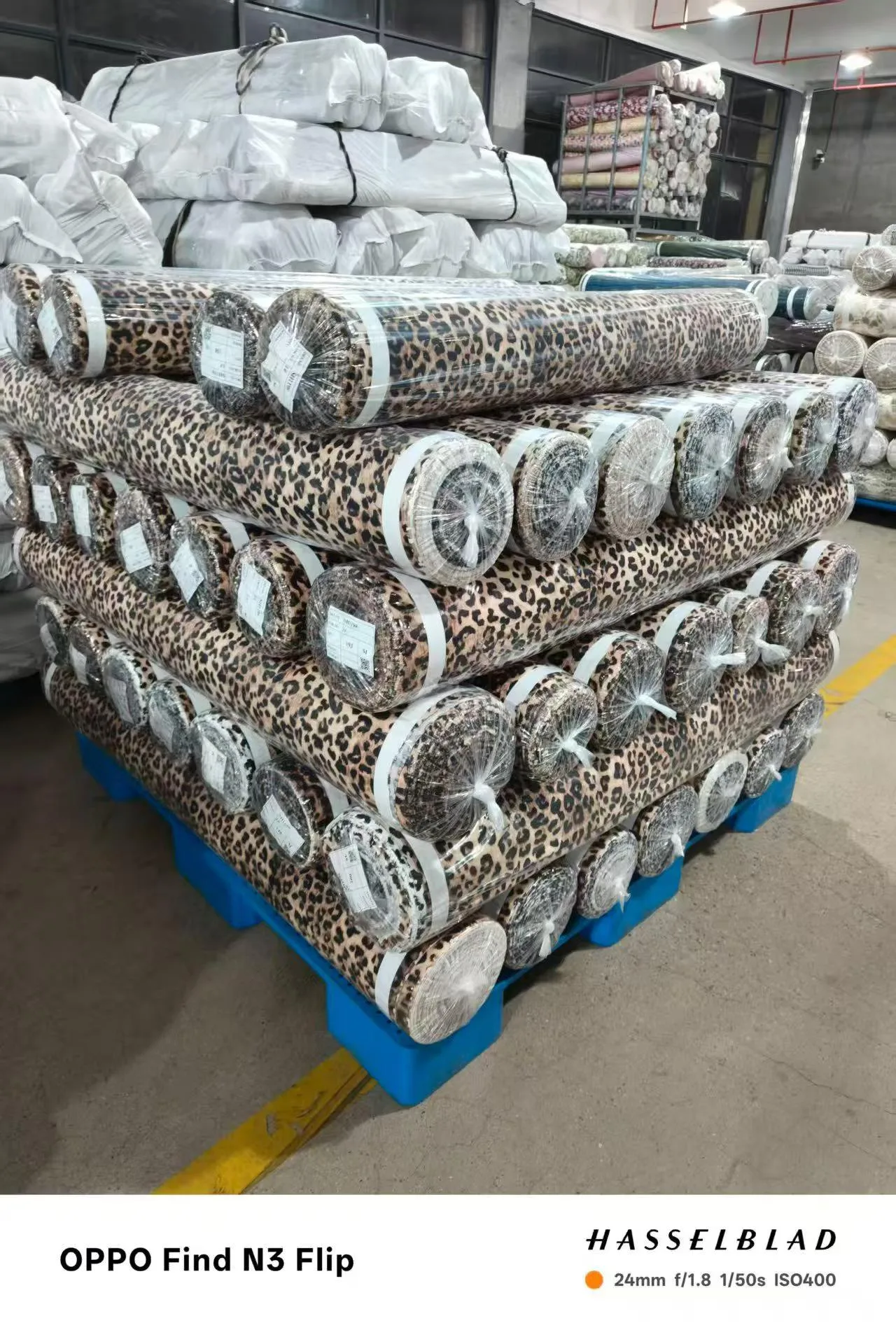
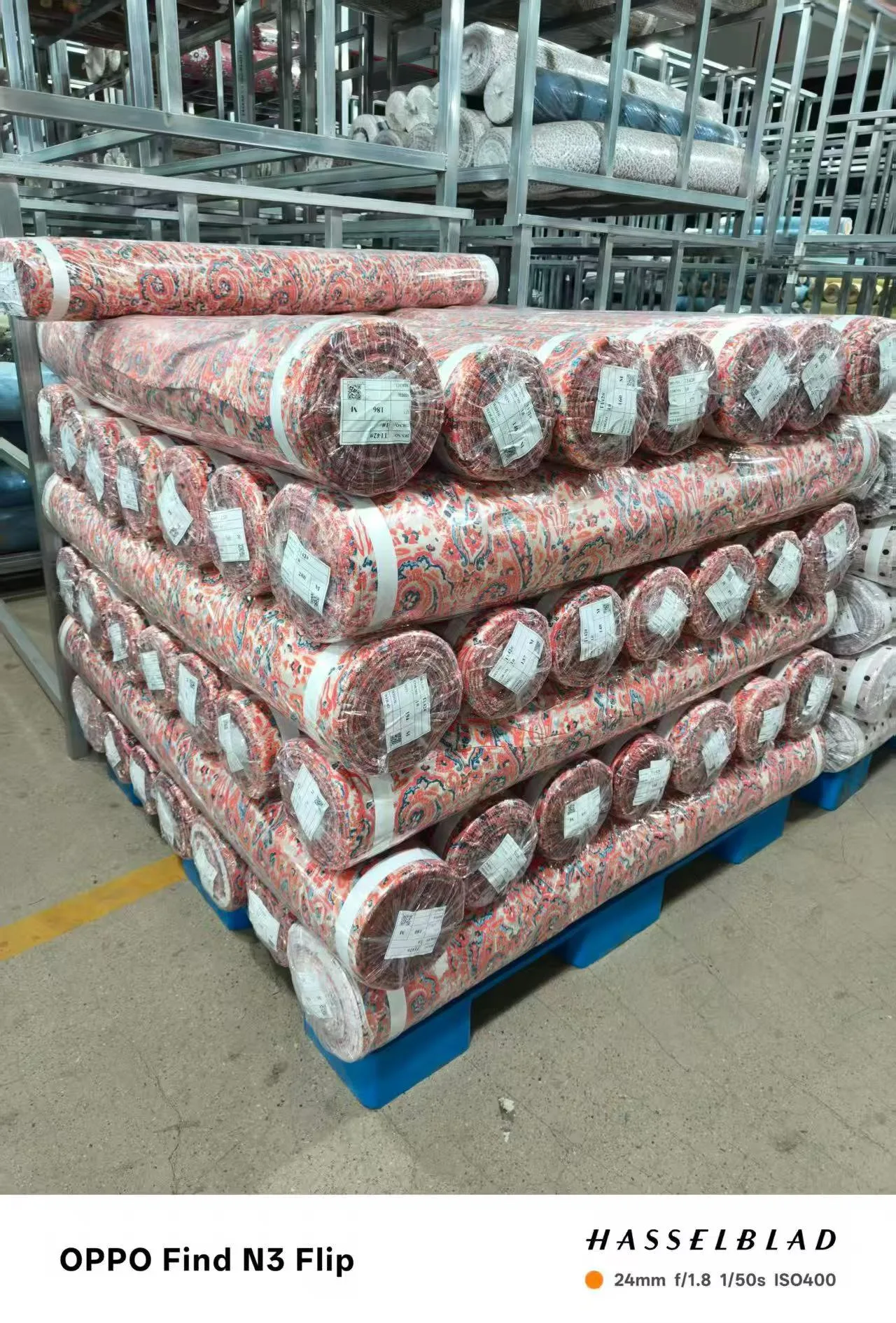
What Does GSM Mean in Fabric? A Mill's Weight Guide
GSM (grams per square meter) decides drape, opacity, and price tier. What 90, 100, and 120 GSM actually mean on a printed rayon roll — from a China mill.
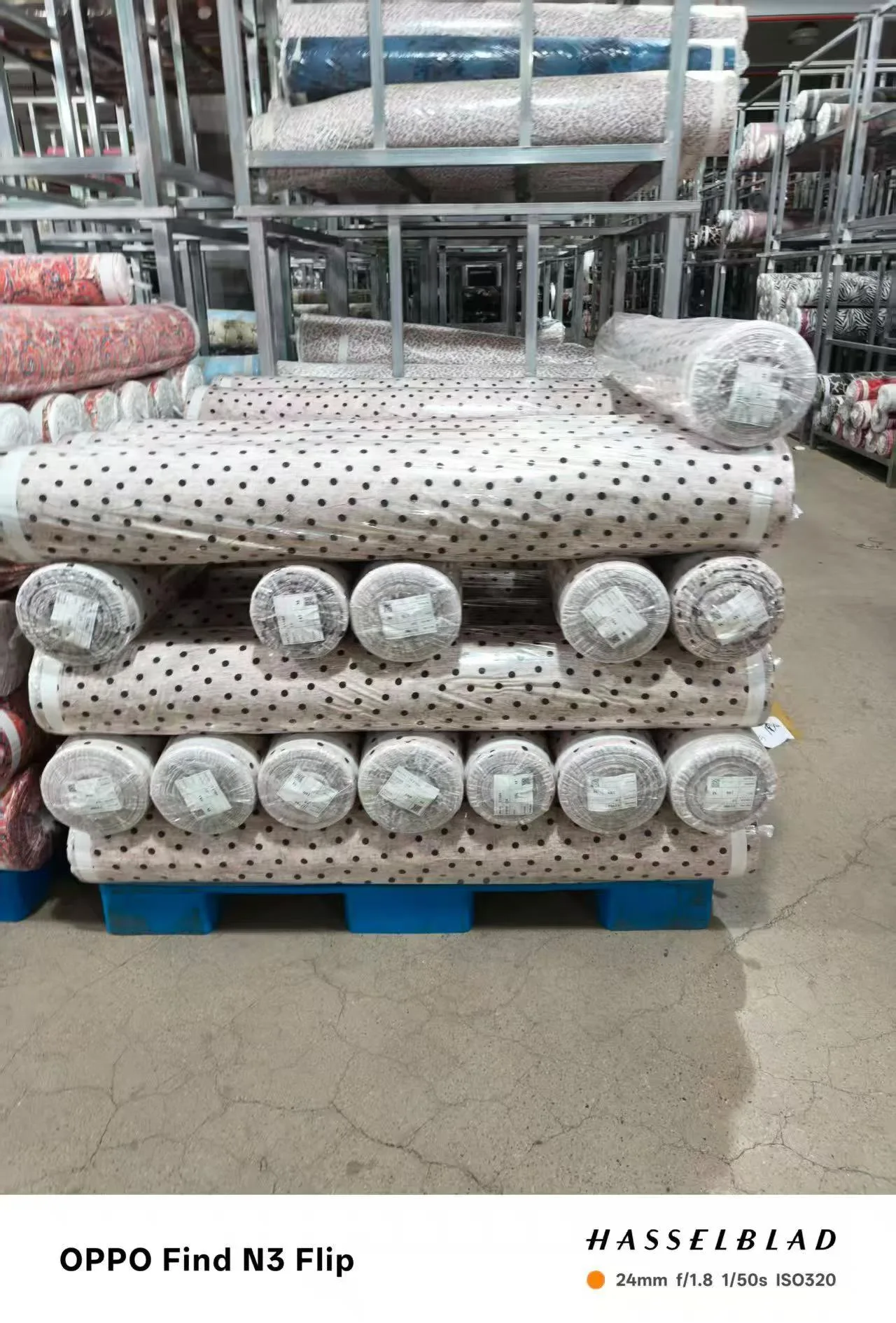
You’re comparing two swatch cards. One says “Rayon, 90 GSM.” The other says “Rayon, 130 GSM.” Same fiber, same width, but the 130 GSM is quoted 28% higher per meter. Is the heavier one better? Not exactly. GSM is the single most useful number on a fabric swatch card — but only if you know what range your garment needs. Pick wrong and you either pay too much or get a dress that won’t drape.
We run a printing mill in China that ships printed rayon, cotton, and lyocell-blend fabric to 30+ countries every week, and GSM is the first number we ask every new buyer. The rest of this article is from the warehouse floor — not a textile-school glossary.
What GSM literally means
GSM = grams per square meter. A 1-meter × 1-meter sheet of the fabric, weighed in grams. That’s it.
A 90 GSM rayon means a 1 m × 1 m sheet weighs 90 g. A 130 GSM rayon weighs 130 g. The number captures density — how much fiber is packed into a given area. Higher GSM = more fiber = heavier fabric, with all the side effects: more opaque, less drapey, longer to dry, more expensive per meter.
The metric system uses GSM. American spec sheets often use oz/yd² (ounces per square yard). Conversion is straightforward: 1 oz/yd² ≈ 33.9 GSM, so a 4 oz/yd² fabric is roughly 135 GSM. If your supplier quotes one and your buyer wants the other, ask the supplier to confirm both — don’t trust your own conversion arithmetic in a contract.
The four GSM bands every wholesale buyer should know
In wholesale fashion fabric, four bands cover 90% of garment categories:
| GSM band | Fabric type | What it’s for |
|---|---|---|
| 70–90 | Lightweight | Sheer blouses, summer scarves, lining fabric |
| 90–110 | Standard wholesale | Kaftans, dresses, resort wear, kimonos — the sweet spot |
| 110–140 | Mid-weight | Structured shirts, wide-leg pants, lightweight blazers |
| 140–200 | Heavy / structured | Structured wear, outerwear, denim-look bottoms |
The “standard wholesale” band (90–110 GSM) is where the bulk of our order book sits. It’s the band that drapes well enough to flatter, holds enough body to not feel cheap, and doesn’t waste material. If you’re sourcing for the first time, start here.
Why our rayon runs at 90–100 GSM (not 70, not 130)
We picked the 90–100 GSM band on purpose. The reasons are operational:
- Drape-to-price ratio. At 90 GSM, printed rayon drapes like silk-touch challis at $0.88–$1.00/m. Drop to 70 GSM and the fabric becomes too sheer for most garments without lining (which adds cost downstream). Climb to 130 GSM and you’re paying 25–30% more per meter for fabric that flatters fewer body types.
- Print clarity. Rotary screen and digital printing both perform best in a narrow GSM window because ink absorption and curing are calibrated for that weight. Thin fabric bleeds; thick fabric muddies fine motifs. We tested 80, 90, 100, 110 GSM with the same Persian botanical print — 90–100 GSM had the cleanest print edges.
- MOQ economics at low volume. Our 90 GSM rayon ships from MOQ 150 m. A heavier 130 GSM would push MOQ higher (more fiber per meter = warehouse turnover slows), and pushing MOQ above 150 m hurts indie buyers more than the extra weight helps end-users.
- Shipping math. A 500-meter order at 90 GSM weighs about 65 kg. The same order at 130 GSM weighs 94 kg. Air courier rates jump at 100 kg breakpoints — buyers under 50 kg often choose lighter GSM partly to keep the air freight in the affordable bracket.
This band isn’t universally right. It’s right for the buyer profile we serve: indie womenswear designers, Middle Eastern kaftan importers, online boutiques placing 200–500 m orders.
How GSM differs across our four fabric bases
Different fibers and weaves hit different “natural” GSM bands. Here’s what we run, with honest numbers:
| Base | Composition | Our GSM | Why this weight |
|---|---|---|---|
| Rayon (Viscose) | 100% Rayon | 90–100 | Drape-to-price sweet spot for dresses, kaftans, resort wear |
| Tencel-Linen Blend | 85% Rayon + 15% Nylon | 120–125 | Heavier hand reads as “linen” without linen wrinkle/price |
| Lyocell Blend | 70% Rayon + 30% Lyocell | 100–110 | Slightly heavier than pure rayon, smoother surface |
| 100% Cotton Print | 100% Cotton (poplin/plain) | 100 | Crisp hand for kids’ wear, structured tops, bedding |
The rayon at 90–100 GSM and the cotton poplin at 100 GSM look numerically close. They feel completely different in the hand. GSM tells you about weight; weave structure tells you about hand-feel. A poplin at 100 GSM feels crisp because the tight cotton plain weave holds its shape; rayon at 100 GSM feels slinky because viscose fibers fall closer to silk in flow. Always ask for a swatch — GSM alone won’t tell you how a fabric drapes.
Common GSM mistakes first-time buyers make
A typical scenario from our order book: a Vancouver indie label launching a Spring/Summer dress collection specifying “120 GSM rayon” because their mood board referenced an Italian designer dress. We pushed back: the Italian dress was likely 90 GSM rayon-blend with a structured lining. At 120 GSM, the buyer would have paid 18% more per meter and gotten a heavier dress that didn’t move the way the mood board suggested. They switched to our 95 GSM rayon, saved on freight, and the sample dress matched the mood board.
Three common mistakes we see:
- Confusing “premium” with “heavier.” Higher GSM isn’t automatically better quality. A well-made 90 GSM rayon outperforms a poorly-made 130 GSM polyester for most garment categories. Buy by GSM band that matches the garment, not by GSM as a luxury signal.
- Ignoring tolerance. GSM is measured per roll, and standard tolerance is ±3 g/m². If your supplier quotes “90 GSM” and the inspection report shows 86 GSM on one roll, that’s within tolerance, not a defect. Lock the tolerance into the PO so neither side argues later.
- Comparing GSM across different fibers. A 100 GSM cotton and a 100 GSM rayon are not interchangeable. The cotton drapes stiffer, the rayon flows softer. GSM only compares within the same fiber/weave family.
Sourcing checklist — what to ask about GSM
When you receive a quote that mentions GSM:
- ☐ Confirm GSM in g/m² (not oz/yd² unless your buyer needs that unit).
- ☐ Ask for GSM tolerance in writing (we use ±3 g/m²; some mills tolerate ±5 or worse).
- ☐ Ask which GSM range the print method supports — rotary screen and digital each have a narrow optimal band.
- ☐ Ask for a physical swatch before locking GSM in the PO. A 90 GSM rayon and 90 GSM rayon-blend feel different in the hand.
- ☐ Ask whether the price tier changes if you adjust GSM. Some mills lock pricing per fiber; others charge per kg of fiber, which means heavier GSM costs proportionally more.
GSM is a number you’ll quote in every PO and every customs declaration. Get it right at the swatch stage and the rest of the order flows clean.
Short answer for skim-readers
GSM = grams per square meter — the weight of a 1 m × 1 m sheet. 90–110 GSM is the wholesale sweet spot for printed rayon dresses, kaftans, and resort wear. Lower GSM (70–90) is sheer blouses and lining; higher (110–140) is structured shirts and pants. Don’t confuse “heavier” with “premium” — a well-made 90 GSM rayon outperforms a poorly-made 130 GSM polyester for most categories.
We run printed rayon at 90–100 GSM, 145 cm width, $0.88–$1.00/m, MOQ 150 m, ready stock in 5–7 days from our China mill. Free swatch cards on request — and the GSM is printed on every card.