Rayon vs Viscose: Are They the Same Fiber?
Rayon and viscose are the same fiber, different names. What the difference means for wholesale buyers — GSM, MOQ, lead time, from a China mill.
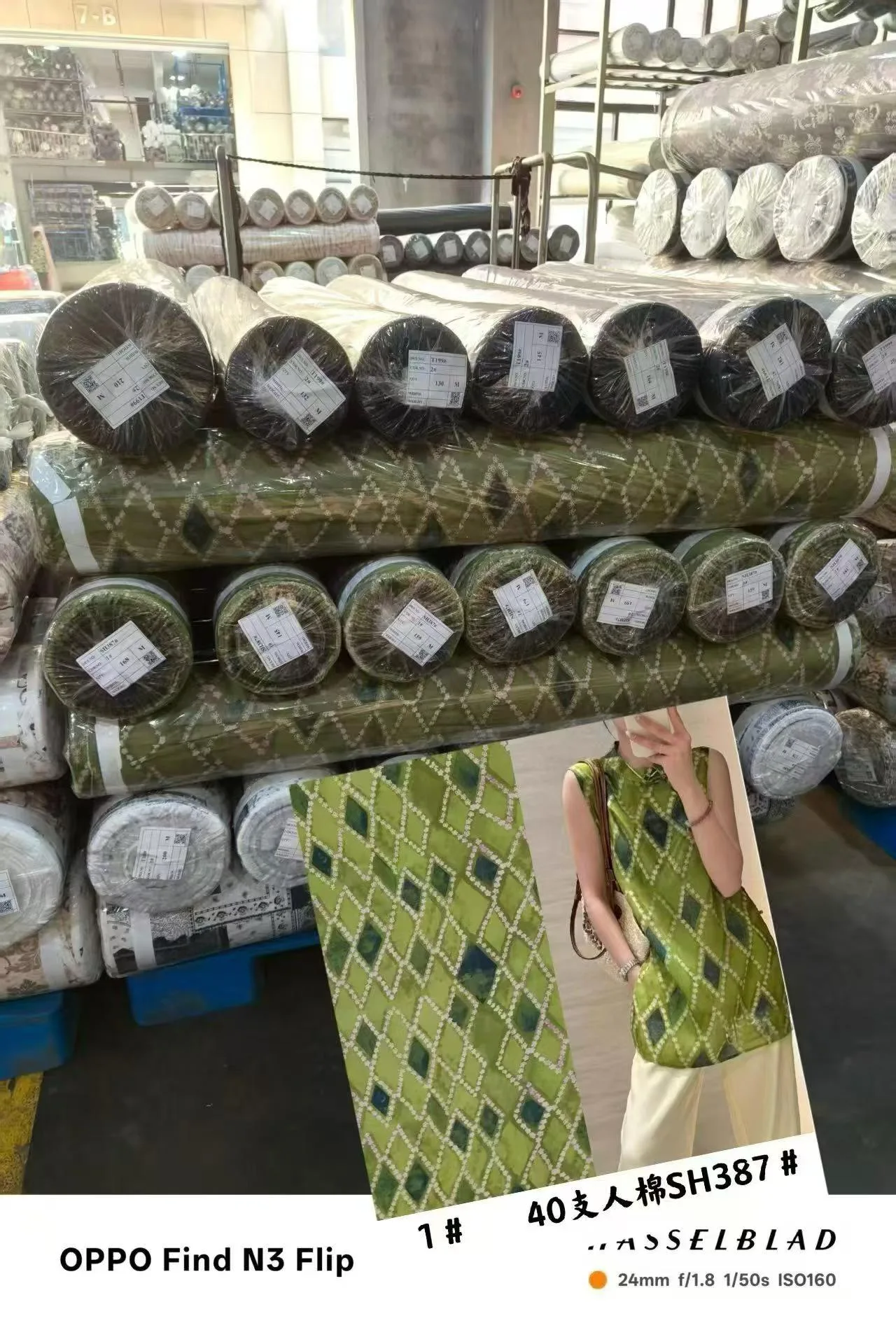
You see “100% rayon” on one supplier’s swatch card. The next swatch card from a European mill says “100% viscose.” Same hand-feel, same drape, different price quote. So which is which? They are the same fiber.
That’s the short answer. The longer answer is why two names exist in 2026, why the price quote can still differ, and what a wholesale buyer should actually be looking at when this terminology shows up. We run a printing mill in China that ships both labels every week, so the rest of this article is from the factory floor — not from a chemistry textbook.
One fiber, two names
Rayon and viscose are both regenerated cellulose fibers. The raw material is wood pulp (most often eucalyptus, beech, or pine). The pulp is dissolved in chemicals, extruded as filaments, and washed back into a stable fiber. The chemistry is identical. The drape is identical. The dye uptake is identical.
The split is historical, not technical:
- “Rayon” is the older North American generic name, coined in 1924 by the U.S. Federal Trade Commission. American mills, retailers, and care-label regulations stuck with it.
- “Viscose” is the international generic name, derived from the viscose process — the chemical method by which the fiber is made. European, Indian, and most Asian markets standardized on this name.
So a designer in New York placing an order for “rayon challis” and a buyer in Milan asking for “viscose challis” are pointing at the exact same roll. We label our rolls based on the destination market: a U.S. customer gets “100% Rayon” on the swatch card, an Italian customer gets “100% Viscose.” Same fabric, same warehouse shelf.
Why prices can still differ
If the fiber is identical, why does one supplier’s “viscose” cost 30% more than another supplier’s “rayon”?
Three real reasons (none of which are about the fiber name):
- GSM (grams per square meter). A 70 GSM viscose georgette and a 110 GSM rayon challis are different weights of the same fiber. The heavier weight uses more material and costs more. We run our rayon prints at 90–100 GSM because that’s the wholesale sweet spot for kaftans, blouses, and resort wear — light enough to drape, heavy enough not to feel cheap.
- Print method. Rotary screen printing is the cheapest per meter at scale (we use it for runs over 500 m). Digital printing is more expensive per meter but supports lower MOQ and unlimited colors. Water-based (“watermark”) printing has the softest hand. The same fiber in three print methods has three different price points.
- MOQ tier. Our Rayon line ships from MOQ 150 m per roll at $0.88–$1.00/m. Drop the MOQ to 50 m and the price jumps. Raise it to 1,500 m and it drops again. The fiber name on the swatch card has nothing to do with this.
Where rayon/viscose fits in a wholesale catalog
We run four fabric bases at our mill. Here’s how rayon stacks up against the others, in honest numbers:
| Base | Composition | GSM | Width | Price (USD/m) | MOQ (m/roll) | Best for |
|---|---|---|---|---|---|---|
| Rayon (Viscose) | 100% Rayon | 90–100 | 145 cm | $0.88 – $1.00 | 150 | Kaftans, dresses, resort wear, scarves |
| Tencel-Linen Blend | 85% Rayon + 15% Nylon | 120–125 | 150 cm | $1.15 – $1.30 | 150 | Linen-look at half the price, structured tops |
| Lyocell Blend | 70% Rayon + 30% Lyocell | 100–110 | 145 cm | $0.98 – $1.05 | 100–150 | Bohemian, eco-conscious lines, soft loungewear |
| 100% Cotton Print | 100% Cotton | 100 | 148 cm | $1.65 – $3.00 | 50 | Children’s wear, bedding, structured pieces |
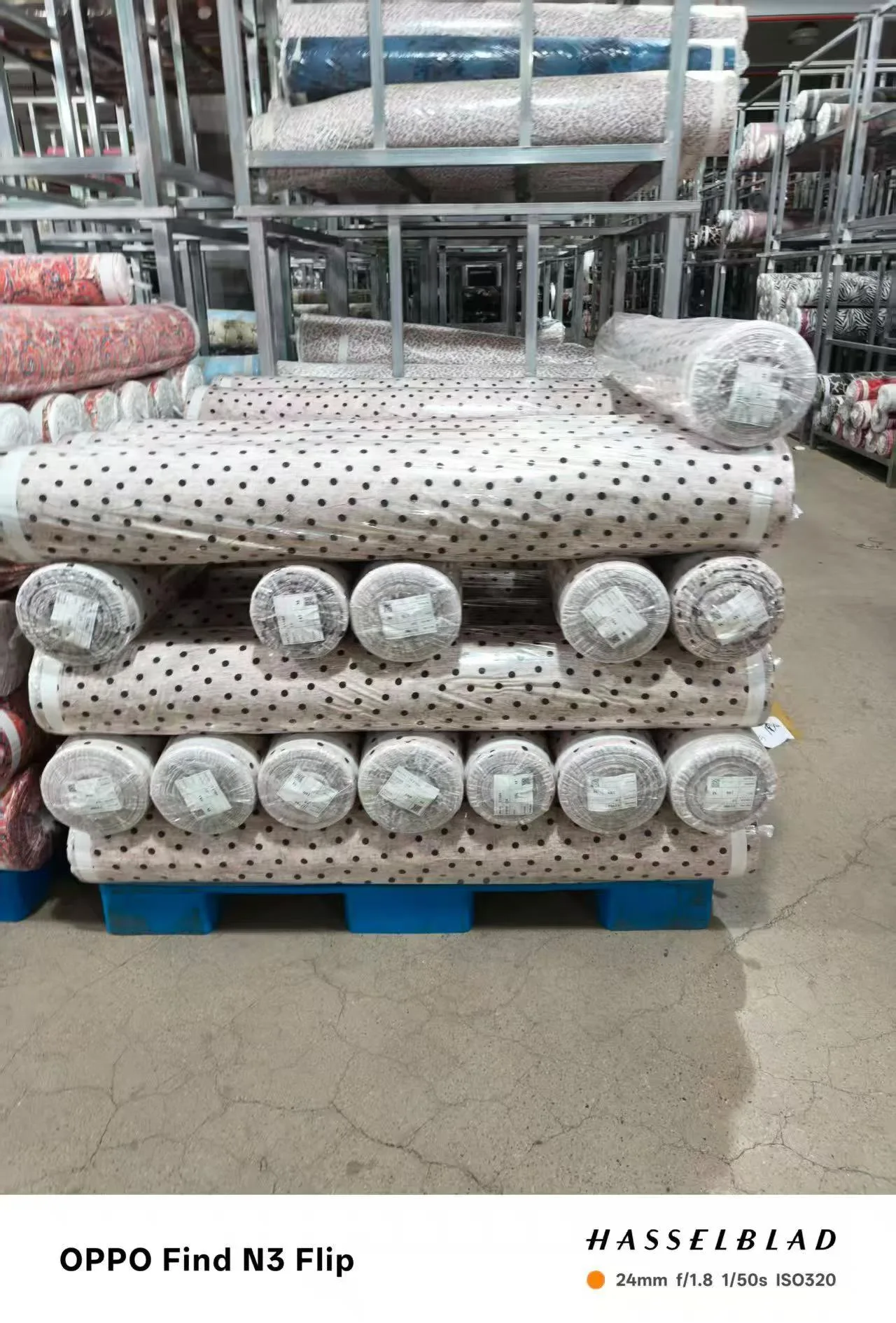
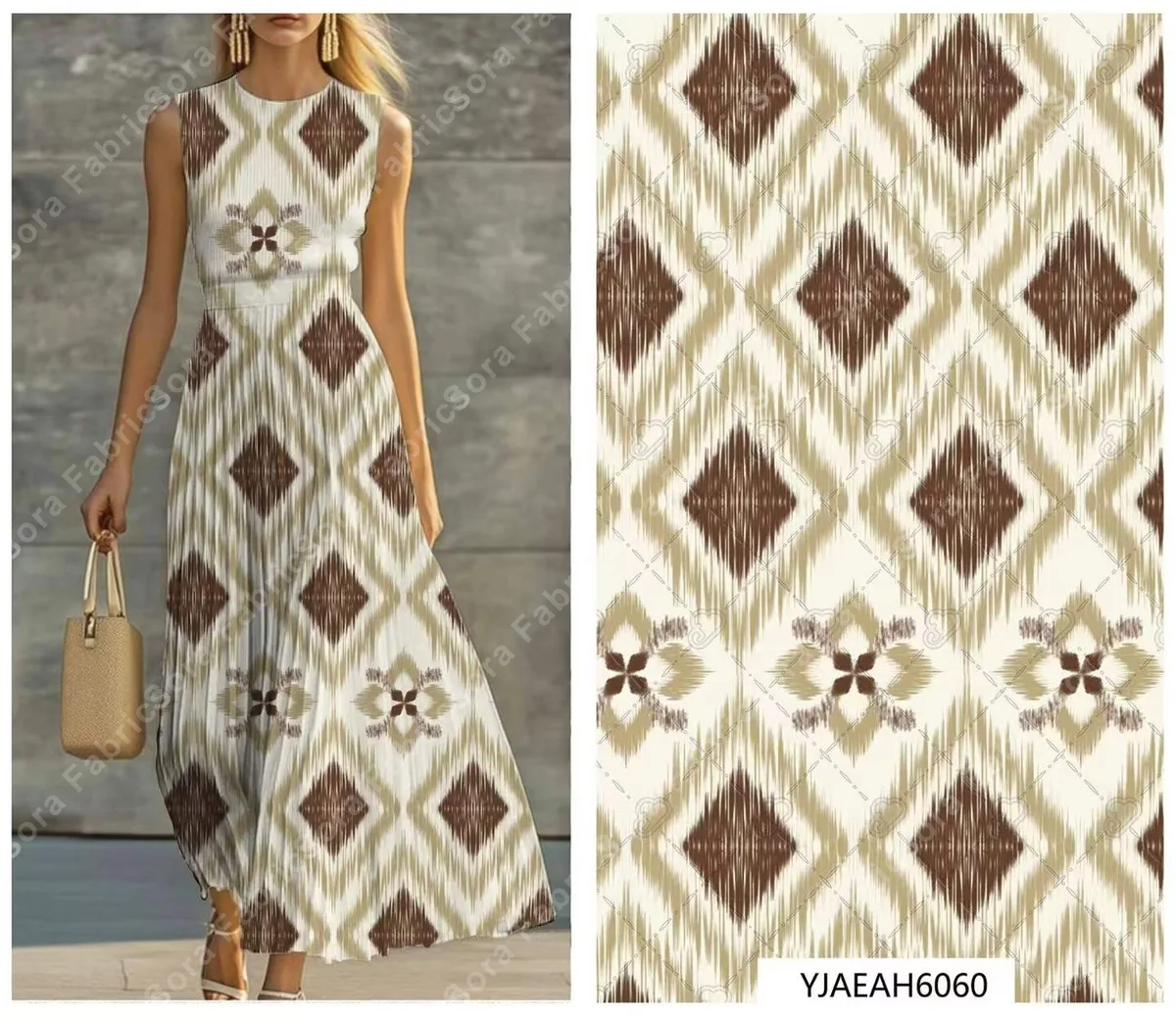
Rayon is the cheapest entry point of the four. That’s why it’s the default choice for indie designers placing first orders, for Middle Eastern buyers ordering kaftan fabric in volume, and for African ethnic-print buyers looking for a lighter alternative to traditional cotton wax print.
If you’re sourcing rayon now and want to skip the full comparison, our 90–100 GSM printed rayon ships from 150 m MOQ at $0.88–$1.00/m, ready stock in 5–7 days — or send a WhatsApp message with your reference image and we’ll quote on the spot.
When you should ask for rayon (and when you shouldn’t)
A typical scenario from our order book — a Los Angeles indie womenswear designer placing 200-meter print runs across six prints for a Spring/Summer drop:
- Pick rayon (90–100 GSM) for the dresses, blouses, and kimonos. The drape is what the customer feels in the fitting room — and rayon has the best price-to-drape ratio of any fiber we run.
- Pick tencel-linen blend (120–125 GSM) for the structured shirts and lightweight blazers in the same drop. The slightly heavier hand reads “linen” without the wrinkle and without the linen price.
- Pick cotton poplin (100 GSM) for the kids’ line if you have one. Rayon hand-feels great but cotton handles repeat washing better — buyers and end-users both prefer it on garments that go through a hot wash cycle every week.
Rayon is wonderful and inexpensive. It’s also not magical. If your buyer needs a fabric that survives 50 industrial wash cycles without shrinkage, rayon isn’t the right pick — that’s a cotton or polyester job.
Sourcing checklist
When you receive a swatch card or quote that says “rayon” or “viscose”:
- Ask for the GSM. This is the single most important number on the card.
- Ask for the width. 145 cm vs 110 cm changes your yield calculations.
- Ask for the MOQ tier and the price at that tier. A low headline price at 5,000 m MOQ is meaningless if you need 200 m.
- Ask which print method was used. Same fiber, three methods, three hand-feels.
- Ask for lead time on ready stock vs. custom print. Our ready stock ships in 5–7 days; custom print runs add 15–25 days.
The fiber name is the smallest decision you’ll make on this fabric. The numbers underneath it are what matter.
Short answer for skim-readers
Rayon and viscose are the same regenerated-cellulose fiber. North America says “rayon,” the rest of the world says “viscose.” Both come from wood pulp. What actually drives the price you pay is GSM, print method, MOQ tier, and lead time — not the name on the card.
If you’re sourcing wholesale printed rayon (or viscose, take your pick), we run 90–100 GSM 145 cm rolls at $0.88–$1.00/m, MOQ 150 m, ready stock ships in 5–7 days from our China mill. Over 1,000 patterns in stock.